Human vision is actually different from what most people assume. The raw data generated by our eyes is very different from how our brain subsequently interprets it—and thus from how we think we see. The image below visualizes the “raw data” stripped of the “post-processing” performed by our brain.
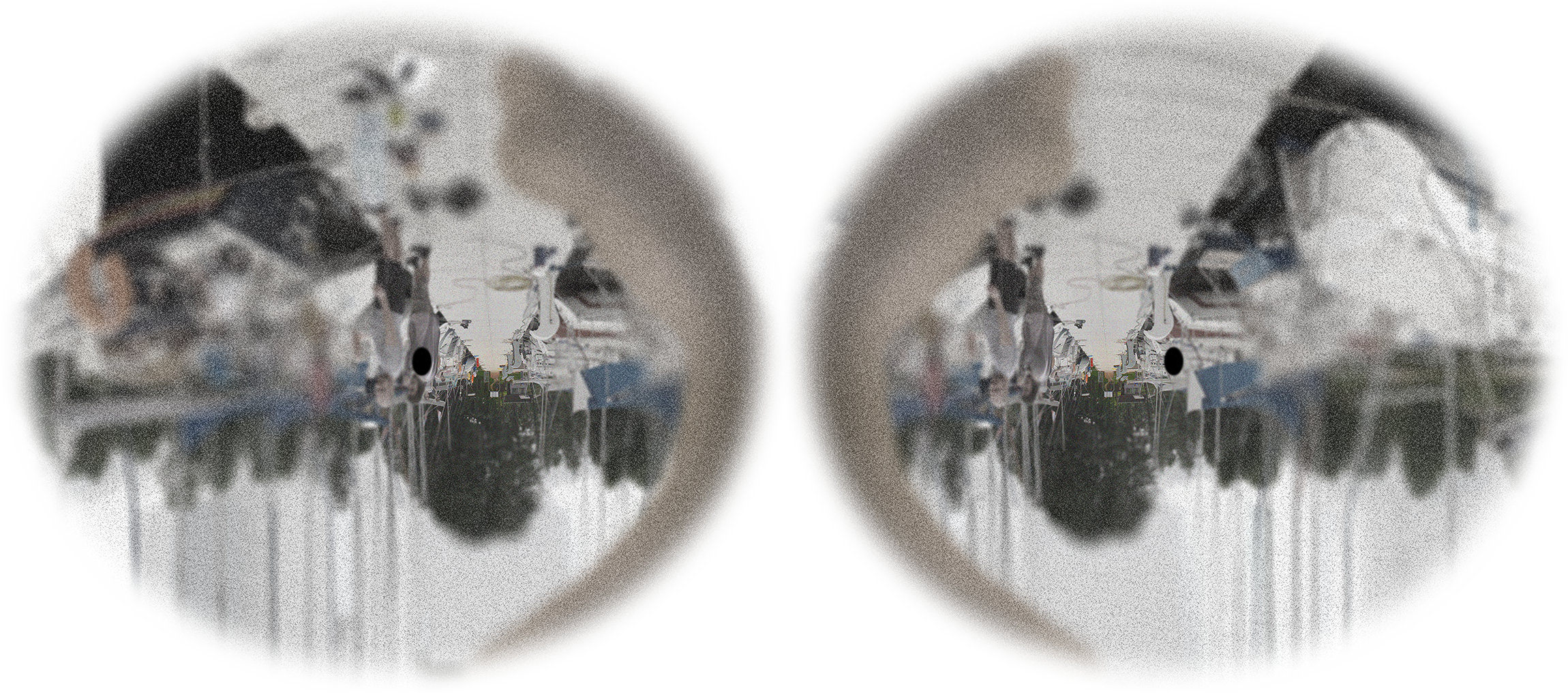
Several notable imperfections can be seen in the image:
- The image is flipped horizontally and vertically. Every baby sees this way at birth, but over time, the brain learns to flip the image. This effect can also very rarely occur after ingesting dissociative hallucinogens.
- The image is rendered separately for each eye—only the brain combines them into a single image.
- The image is sharp only in a small central area and becomes blurry toward the edges.
- The image is most colorful in a small central area and loses saturation toward the edges. This is caused by the high number of cones in the center of the eye, which decreases rapidly away from the center. Each eye has a single black dot—the so-called blind spot (technically known as a scotoma). There are no cones or rods in this part of the eye because the optic nerve is located there. The brain typically fills in these blind spots with information from the other eye.
- Straight lines are slightly distorted into arcs, as if through a fisheye lens or a wide-angle camera lens. The brain tries to straighten these lines, but this is merely an illusion.
- The nose is also visible in the field of view, which the brain normally filters out.
- The image is not perfectly clear but contains faint visual noise. This noise arises from a combination of physical light noise, the inherent noise of the photoreceptors, and other neural activity in the visual system. Under normal conditions, the brain usually suppresses it, but it can be noticeable especially in the dark, with eyes closed, or on uniform surfaces.
For my second-year final project in the multimedia production program, specifically in the animation course at the Vocational School of Commerce, Applied Arts, and Design, I created a video simulating various interesting visual impairments: